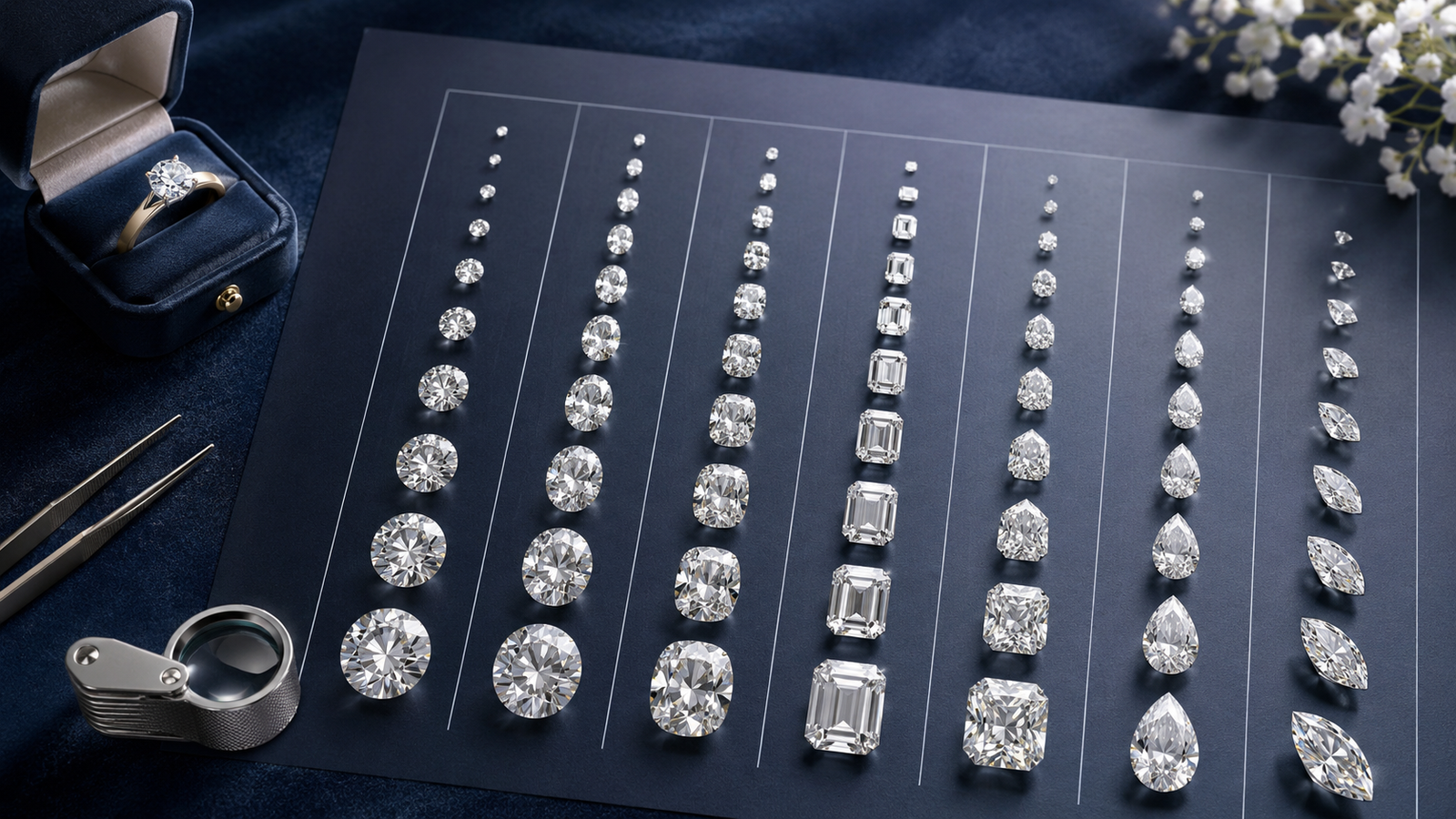
Choosing the right diamond is about more than just carat weight. The physical dimensions of a diamond play an equally important role in how large, brilliant, and valuable it appears. Whether you’re shopping for an engagement ring, earrings, pendant, or custom jewelry, understanding a diamond size chart can help you make a smarter buying decision.
Many buyers assume that a higher carat automatically means a bigger-looking diamond, but that’s not always true. Factors such as cut quality, shape, and proportions significantly influence how large a diamond appears to the eye. Using a reliable diamond size chart allows you to compare measurements accurately before making a purchase.
If you’re looking for a detailed visual reference, the comprehensive diamond size chart from MyBirthstone.org is an excellent resource that simplifies diamond dimensions across different carat weights and shapes.
What Is a Diamond Size Chart?
A diamond size chart is a reference guide that compares a diamond’s:
- Carat weight
- Diameter (for round diamonds)
- Length and width (for fancy shapes)
- Approximate face-up appearance
- Relative size comparison
Rather than relying solely on carat weight, the chart shows the actual millimeter measurements of a diamond. Since jewelry settings are designed around these dimensions, understanding them helps buyers select the perfect stone.
Why Diamond Size Matters
The visible size of a diamond influences:
- Overall beauty
- Ring proportions
- Finger coverage
- Visual brilliance
- Budget efficiency
Interestingly, two diamonds with identical carat weights can appear noticeably different because of differences in cut quality.
For example:
- A well-cut 1-carat diamond often appears larger than a poorly cut 1-carat diamond.
- A shallow-cut diamond may look wider but lose sparkle.
- A deep-cut diamond retains weight underneath, making it appear smaller from above.
Understanding Carat vs Size
One of the biggest misconceptions in diamond shopping is confusing carat with physical size.
Carat measures weight—not diameter.
Here is a simplified comparison for round diamonds:
| Carat | Approx. Diameter |
| 0.25 ct | 4.1 mm |
| 0.50 ct | 5.2 mm |
| 0.75 ct | 5.8 mm |
| 1.00 ct | 6.5 mm |
| 1.50 ct | 7.4 mm |
| 2.00 ct | 8.2 mm |
| 3.00 ct | 9.3 mm |
These measurements may vary slightly depending on cut quality.
Why Millimeters Are More Important Than Carats
Jewelry designers frequently work with millimeter measurements rather than carat weight.
That’s because:
- Settings fit dimensions, not weight.
- Side stones are matched by diameter.
- Earrings require equal measurements.
- Halo settings depend on stone dimensions.
Knowing the exact size prevents mismatched jewelry.
Diamond Shapes Affect Appearance
Not every diamond shape appears the same.
Different cuts distribute weight differently, making some shapes appear larger.
Round Brilliant
The classic choice.
Advantages:
- Maximum brilliance
- Excellent light performance
- Timeless appearance
Appears slightly smaller than elongated shapes of equal carat weight.
Oval
Oval diamonds often look larger than round diamonds.
Benefits include:
- Longer finger appearance
- Greater surface area
- Elegant design
Excellent choice for maximizing visual size.
Pear
Pear-shaped diamonds combine elegance with size.
Advantages:
- Larger face-up appearance
- Unique style
- Slimming effect on fingers
Marquise
The marquise cut offers one of the largest appearances for its weight.
Benefits:
- Maximum spread
- Dramatic shape
- Excellent finger coverage
Emerald
Known for sophistication rather than sparkle.
Features include:
- Step-cut facets
- Large open table
- Elegant reflections
Although elongated, clarity becomes more important.
Cushion
A cushion cut combines vintage charm with modern brilliance.
Characteristics:
- Rounded corners
- Soft appearance
- Strong sparkle
Sizes vary depending on cutting style.
How Cut Quality Changes Size Appearance
Cut quality affects both sparkle and perceived size.
Excellent-cut diamonds:
- Reflect more light
- Appear brighter
- Look slightly larger
Poorly cut diamonds:
- Leak light
- Appear dull
- Often seem smaller
Investing in an excellent cut typically provides the best visual impact.
Diamond Depth and Spread
The “spread” refers to how large a diamond looks from above.
Two diamonds weighing one carat may differ because:
- One is cut deeper.
- One is cut shallower.
A balanced cut produces:
- Better sparkle
- Better proportions
- Larger face-up appearance
Finger Size Makes a Difference
A diamond’s appearance also depends on finger size.
For example:
A 1-carat diamond may look:
- Large on a size 4 finger
- Moderate on a size 8 finger
This is why many jewelers recommend viewing diamonds on hands similar to your own.
Choosing the Right Diamond Size
Your ideal diamond depends on several factors.
Consider:
Budget
Carat prices increase dramatically at milestone weights.
For example:
- 0.90 ct
- 1.00 ct
- 1.50 ct
- 2.00 ct
Buying just below these benchmarks often provides better value.
Lifestyle
Active lifestyles may benefit from:
- Lower-profile settings
- Slightly smaller stones
- Protective designs
Larger diamonds may require extra care.
Ring Style
Different settings influence perceived size.
Popular settings include:
- Solitaire
- Halo
- Three-stone
- Pavé
- Bezel
Halo settings, in particular, can make a center stone appear much larger.
Tips for Maximizing Diamond Size
If you’re shopping on a budget, consider these expert tips.
Choose Excellent Cut
Sparkle creates visual size.
Never sacrifice cut quality solely for carat weight.
Consider Oval or Marquise
These shapes provide more visible surface area.
Many buyers choose them for their impressive appearance.
Buy Slightly Below Popular Carat Weights
Instead of:
- 1.00 ct
Consider:
- 0.90–0.95 ct
The visual difference is minimal, while the price difference can be substantial.
Use Halo Settings
A halo surrounds the center stone with smaller diamonds.
Benefits include:
- Bigger appearance
- Extra sparkle
- Luxury look
Diamond Size for Different Jewelry
Engagement Rings
Popular center stone sizes:
- 0.50 ct
- 0.75 ct
- 1.00 ct
- 1.50 ct
Earrings
Balanced measurements matter more than carat weight.
Matching diameters create symmetry.
Pendants
Larger diamonds often work well because they aren’t limited by finger size.
Tennis Bracelets
Consistency in diamond dimensions is essential for a seamless look.
Common Diamond Size Myths
Myth 1: Bigger Carat Means Bigger Diamond
False.
Cut quality changes visible size.
Myth 2: Round Diamonds Always Look Largest
False.
Oval and marquise diamonds usually appear larger.
Myth 3: All One-Carat Diamonds Have the Same Diameter
False.
Dimensions vary according to cut proportions.
Myth 4: Size Is More Important Than Sparkle
False.
Brilliance often attracts more attention than physical size.
Using an Online Diamond Size Chart
A digital size chart helps buyers:
- Compare multiple shapes
- Understand measurements
- Estimate finger coverage
- Visualize proportions
- Make informed purchases
Rather than guessing, buyers can compare exact dimensions before investing in a diamond.
The detailed diamond size chart available at MyBirthstone.org provides an easy-to-understand reference for comparing different diamond sizes and shapes, making it a valuable tool for both first-time buyers and experienced jewelry enthusiasts.
Frequently Asked Questions
What is a diamond size chart?
A diamond size chart is a visual guide that compares carat weight with actual millimeter dimensions, helping buyers understand how large different diamonds appear.
Does a higher carat always mean a larger-looking diamond?
No. Cut quality, shape, and proportions all affect a diamond’s visible size. Two diamonds with the same carat weight can look noticeably different.
Which diamond shape appears the largest?
Marquise and oval diamonds generally offer the largest face-up appearance for the same carat weight because of their elongated shapes.
Why are millimeter measurements important?
Millimeter measurements determine how a diamond fits into jewelry settings and provide a more accurate representation of its visible size than carat weight alone.
Where can I compare different diamond sizes?
You can compare diamond dimensions, shapes, and carat measurements using the detailed diamond size chart available at MyBirthstone.org, which serves as a practical reference for selecting the right diamond.
Final Thoughts
Buying a diamond is both an emotional and financial investment. While carat weight often receives the most attention, the true appearance of a diamond depends on its measurements, proportions, cut quality, and shape. Understanding these factors helps you choose a stone that delivers exceptional beauty without exceeding your budget.
A dependable diamond size chart removes much of the uncertainty from the buying process by allowing you to compare actual dimensions rather than relying on weight alone. Whether you’re selecting a timeless round brilliant, an elegant oval, or a striking marquise, using a trusted size guide ensures you’re making an informed decision.
Before making your final purchase, take advantage of the comprehensive resources available at MyBirthstone.org. Their detailed diamond size chart can help you visualize diamond dimensions, compare shapes, and confidently select the perfect gemstone for your next piece of jewelry.