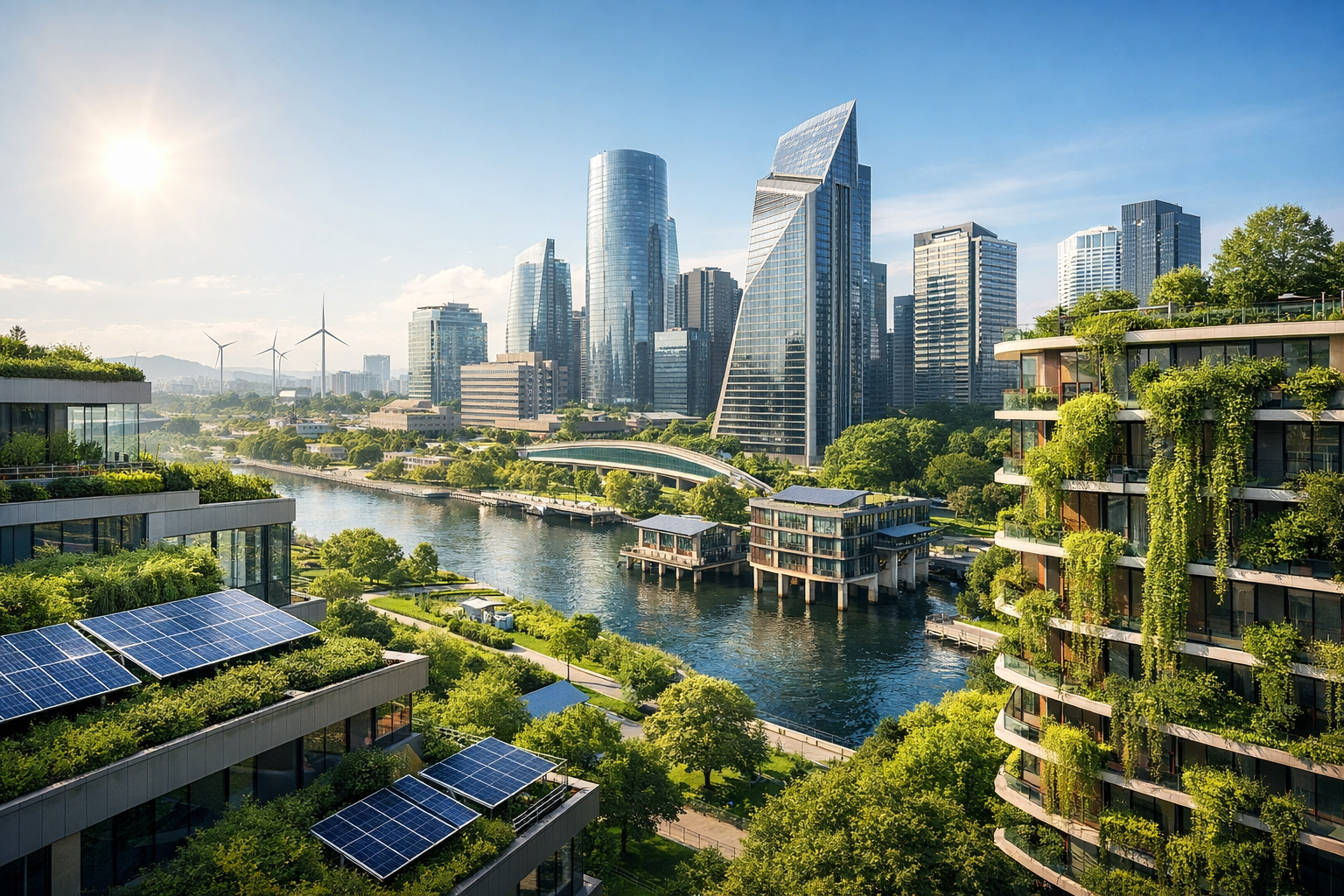
Climate change is no longer a distant concern—it is a daily reality shaping how cities grow, adapt, and survive. Rising temperatures, frequent floods, extreme weather events, and sea-level rise are testing urban environments like never before. In this new reality, architecture is not just about aesthetics or shelter; it has become a frontline tool in building climate-resilient cities.
Architecture plays a decisive role in how cities respond to environmental stress. From material selection to urban planning strategies, climate-resilient architecture is redefining how buildings interact with nature rather than resist it.
Understanding Climate-Resilient Cities
A climate-resilient city is designed to anticipate, withstand, and recover from climate-related disruptions while protecting the health, safety, and livelihoods of its residents. These cities integrate sustainability, adaptability, and long-term environmental responsibility into their infrastructure.
Architecture underpins this resilience. Buildings occupy a significant portion of urban land, consume vast amounts of energy, and directly influence carbon emissions. When designed thoughtfully, they can reduce environmental impact while enhancing urban durability.
Architecture as a Shield Against Climate Extremes
Designing for Heat, Floods, and Storms
Modern architecture must respond to region-specific climate risks. In flood-prone areas, elevated structures, permeable foundations, and adaptable ground floors reduce damage and accelerate recovery. In hotter climates, passive cooling strategies—such as cross-ventilation, shaded facades, and thermal mass—lower indoor temperatures without excessive energy use.
Storm-resistant architecture incorporates reinforced structures, aerodynamic forms, and resilient materials that can endure high winds and heavy rainfall. These design choices significantly reduce long-term repair costs and human risk.
Passive Design: A Climate-Smart Approach
Passive architectural strategies are among the most effective tools for resilience. By optimizing building orientation, window placement, insulation, and natural airflow, architects reduce dependency on mechanical systems. This not only lowers energy consumption but also ensures buildings remain habitable during power outages caused by extreme weather.
Sustainable Materials and Low-Carbon Construction
The construction sector is one of the largest contributors to global carbon emissions. Climate-resilient architecture prioritizes low-carbon, durable, and locally sourced materials that reduce environmental impact.
Materials such as recycled steel, engineered timber, rammed earth, and low-emission concrete are gaining popularity. These materials offer strength, longevity, and improved thermal performance while minimizing embodied carbon.
Using local materials also enhances resilience by reducing supply chain vulnerabilities and ensuring buildings are better suited to local climate conditions.
Architecture and Urban Ecosystems
Integrating Nature into the Built Environment
Climate-resilient cities do not separate buildings from nature—they merge them. Green roofs, vertical gardens, urban forests, and permeable surfaces help manage stormwater, reduce urban heat islands, and improve air quality.
Architectural designs that incorporate natural ecosystems act as environmental buffers, absorbing excess heat and rainfall while supporting biodiversity. These features also improve mental well-being and overall quality of urban life.
Water-Sensitive Architectural Design
Water scarcity and flooding are two sides of the same climate challenge. Architecture plays a crucial role in managing both through rainwater harvesting, greywater recycling, and efficient drainage systems.
Buildings designed to capture, store, and reuse water reduce pressure on municipal systems and ensure a reliable water supply during droughts or emergencies.
Social Resilience Through Architecture
Climate resilience is not only environmental—it is social. Architecture shapes how communities live, interact, and support one another during crises.
Well-designed public buildings, emergency shelters, and mixed-use developments strengthen social cohesion and accessibility. Climate-resilient architecture prioritizes inclusivity by ensuring safe housing for vulnerable populations, particularly in high-risk areas.
Affordable, adaptable housing solutions prevent displacement and help cities recover faster after climate-related disasters.
Smart Architecture and Technology Integration
The future of climate-resilient cities lies at the intersection of architecture and technology. Smart buildings equipped with sensors, energy management systems, and adaptive facades respond in real time to changing environmental conditions.
Data-driven design allows architects to model climate scenarios, predict performance, and optimize buildings before construction even begins. This proactive approach significantly enhances resilience and efficiency.
Policy, Planning, and the Architect’s Responsibility
Architecture alone cannot create climate-resilient cities—it must align with urban policy and planning frameworks. Architects increasingly collaborate with governments, engineers, and environmental scientists to develop climate-responsive building codes and zoning regulations.
Resilient architecture supports long-term urban strategies by reducing disaster recovery costs, lowering emissions, and future-proofing cities against climate uncertainty.
The Future of Architecture in Climate-Resilient Cities
As climate challenges intensify, architecture will continue to evolve from static design to adaptive systems. Future cities will rely on buildings that can change, regenerate, and respond dynamically to environmental pressures.
Architects are no longer just designers of space; they are stewards of sustainability and resilience. Their decisions today will determine whether cities become fragile or future-ready.
Conclusion
The role of architecture in climate-resilient cities is both transformative and essential. Thoughtful design, sustainable materials, passive strategies, and ecosystem integration enable cities to withstand climate threats while improving quality of life.
As urban populations grow and climate risks rise, resilient architecture will define the survival and success of cities worldwide. Investing in climate-responsive design today is not optional—it is the foundation of sustainable urban futures.