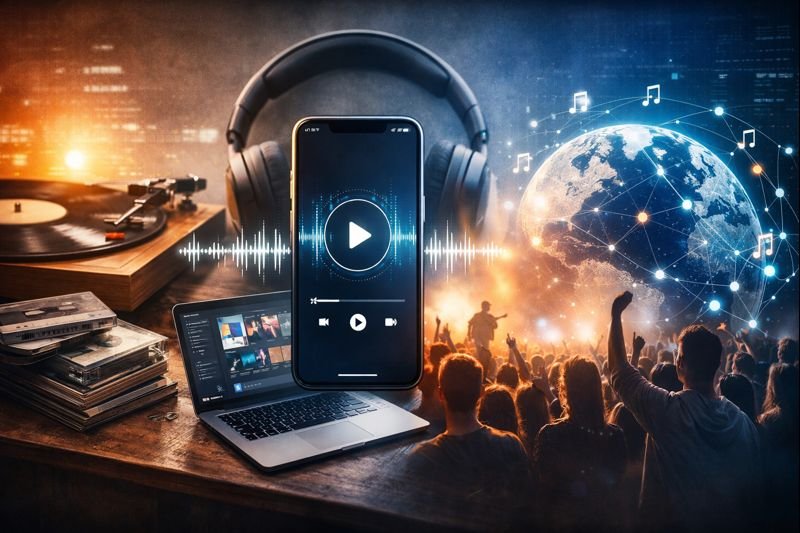
Music has always evolved alongside technology. From vinyl records to cassette tapes, CDs to MP3 downloads, each shift reshaped how people discover and enjoy sound. But no change has been as fast—or as far-reaching—as the rise of streaming platforms. Today, services like Spotify, Apple Music, YouTube Music, and Amazon Music dominate the industry, fundamentally transforming how music is consumed, shared, and valued.
Understanding how streaming platforms changed music consumption is essential not only for listeners but also for artists, producers, and anyone interested in the future of entertainment.
The End of Ownership and the Rise of Access
Before streaming, music consumption was built around ownership. Fans bought albums, singles, or digital downloads and stored them physically or digitally. Streaming flipped that model entirely.
Instead of owning music, listeners now access vast libraries on demand. With a single subscription, users can explore millions of tracks without committing to a purchase. This shift lowered the barrier to discovery and removed the financial risk of trying new artists or genres.
Music became less about collecting and more about experiencing.
From Albums to Playlists: A New Listening Culture
Streaming platforms didn’t just change how people access music—they changed how people listen.
The Decline of the Album Era
Albums were once carefully crafted bodies of work, often consumed from start to finish. While albums still matter, streaming has pushed listeners toward individual tracks rather than full releases. Skipping songs is effortless, and attention spans are shorter.
Playlists as the New Gatekeepers
Editorial and algorithmic playlists now shape listening habits. Curated playlists like “Discover Weekly” or “RapCaviar” can launch careers overnight. For many users, playlists have replaced radio stations as the primary way to discover new music.
This shift gave platforms enormous influence over what becomes popular.
Algorithmic Discovery Changed Everything
One of the most significant ways streaming platforms changed music consumption is through personalized recommendations.
Algorithms analyze listening behavior—skips, repeats, likes, and search history—to suggest music tailored to individual tastes. This personalization keeps users engaged longer and encourages deeper exploration.
Unlike traditional radio, which favored mainstream hits, streaming allows niche genres and independent artists to find loyal audiences worldwide.
Music Became More Global Than Ever
Streaming erased geographical boundaries. A listener in India can discover a Latin artist in seconds, while a bedroom producer in Nigeria can gain fans in Europe and North America.
This global accessibility led to:
- The rise of non-English hits on international charts
- Cross-cultural collaborations
- Faster global music trends
Genres like K-pop, Afrobeats, and Latin pop flourished largely because streaming platforms made global distribution effortless.
Shorter Songs, Faster Hooks, and Data-Driven Creativity
Streaming platforms don’t just reflect listener behavior—they influence how music is made.
Since streams often count after the first 30 seconds, artists increasingly:
- Start songs with hooks immediately.
- Shorten track lengths
- Release music more frequently
Data analytics now guide creative decisions. Artists can see where listeners drop off, which songs perform best, and what resonates most with their audience. While some argue this limits artistic freedom, others see it as a powerful feedback loop.
The Economics of Music Consumption Changed
Streaming reshaped the financial side of music consumption—often controversially.
Subscription vs. Free Models
Users can choose between ad-supported free listening or paid subscriptions. This flexibility expanded access but reduced per-stream payouts for artists.
Volume Over Sales
Instead of earning from album sales, revenue now depends on streaming volume. This favors consistent releases and long-term engagement over one-time hits.
While top artists thrive, smaller musicians often rely on touring, merchandise, and fan support to supplement streaming income.
Social Sharing and Viral Moments
Music consumption today is deeply social. Streaming platforms seamlessly integrate with social media, allowing users to share songs, playlists, and listening activity instantly.
Viral moments—often driven by TikTok, Instagram Reels, or YouTube Shorts—can turn unknown tracks into global hits overnight. Music is no longer just heard; it’s experienced visually and socially.
How Streaming Changed the Listener’s Relationship With Music
The biggest change is psychological. Music is now:
- Always available
- Instantly replaceable
- Constantly refreshed
Listeners explore more genres than ever, but they may form fewer long-term attachments to individual artists. Loyalty is fluid, shaped by mood, algorithms, and trends rather than physical collections.
What the Future of Music Consumption Looks Like
As streaming continues to evolve, we can expect:
- Greater AI-powered personalization
- Higher-quality audio formats
- Deeper artist-fan engagement tools
- New monetization models beyond streams
Streaming platforms will likely remain the foundation of music consumption, but how they balance creativity, fairness, and discovery will define the industry’s next chapter.
Final Thoughts
How streaming platforms changed music consumption is not just a story of technology—it’s a story of culture, behavior, and access. Music has become more democratic, more global, and more immediate than ever before.
While challenges remain, one thing is clear: streaming didn’t just change how we listen to music—it changed what music means in our daily lives.