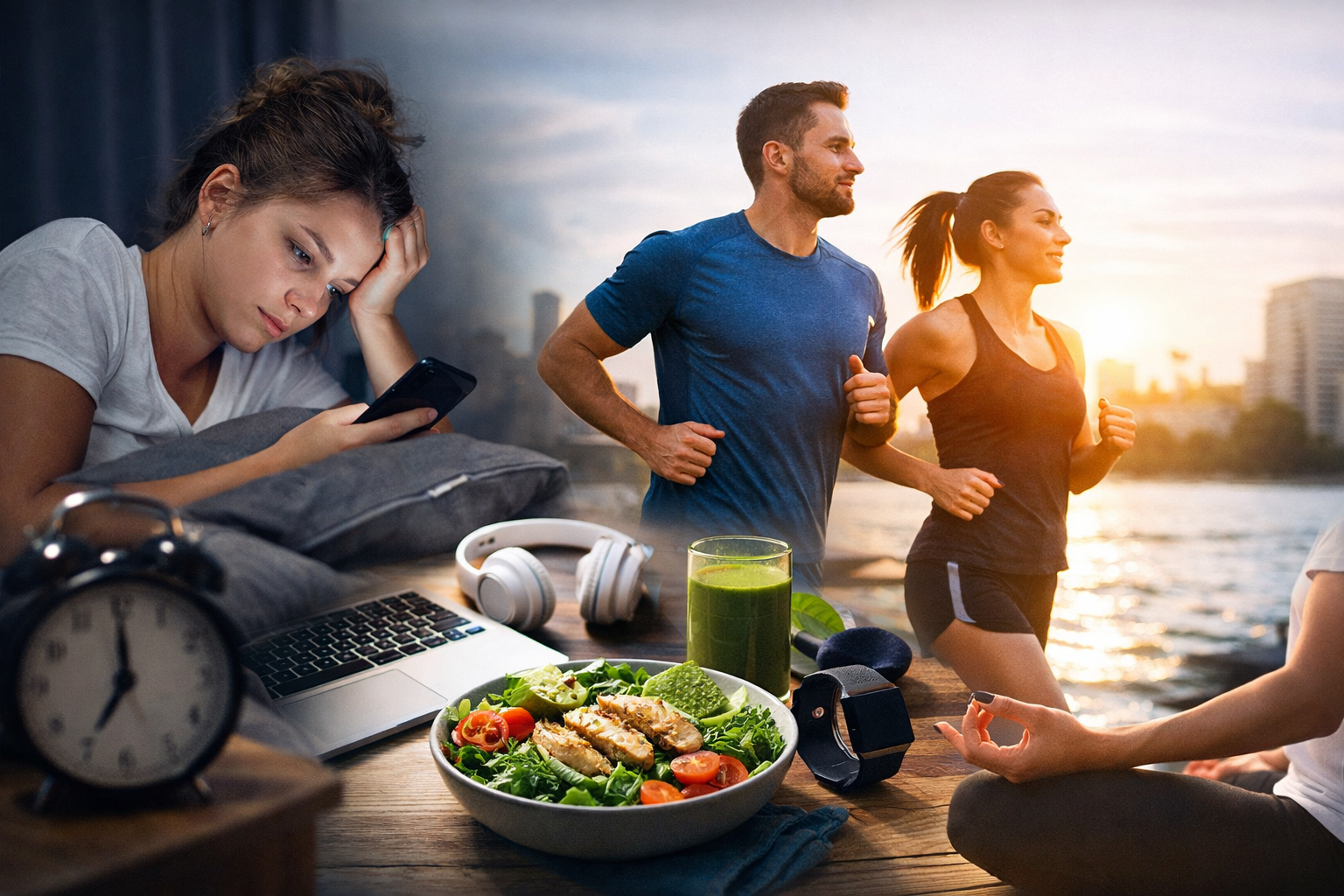
Modern life moves fast—maybe too fast. Between juggling work, social media, errands, relationships, and the unspoken pressure to “keep up,” many people feel like they’re running on fumes. It’s no surprise then that conversations about how modern lifestyle choices affect well-being are everywhere, and for good reason. The habits we adopt every day—sometimes without thinking—shape our bodies, our minds, and the way we experience life.
In this post, we’ll explore the subtle (and not-so-subtle) ways the modern world influences wellness, what common habits are helping or harming us, and simple adjustments that can make a meaningful difference.
⚙️ The Constant “On” Switch: Why Our Brains Never Fully Rest
One of the biggest shifts in modern living is the lack of real downtime. Our parents or grandparents could leave work at work. Today?
- Slack notifications at 10 PM
- Emails during dinner
- The pressure to answer “just one more message.”
This always-on lifestyle increases cortisol (the stress hormone), which over time can lead to:
- Trouble sleeping
- Chronic fatigue
- Irritability and burnout
- Higher risk of anxiety and depression
Even if we’re technically “relaxing,” doomscrolling through social feeds doesn’t allow the brain to rest. It’s stimulation masquerading as downtime.
📌 Mini Reset You Can Try:
Pick a time each evening when the workday is officially “over”—phone in another room, no checking emails. Even 30–60 minutes creates a boundary your brain can trust.
🛏 Sleep: The First Habit We Sacrifice (and the One We Need the Most)
Sleep is the foundation of well-being, yet it’s often treated like an optional feature rather than the fuel we can’t function without. Bright screens, late-night shows, and stress make it harder to get quality sleep.
What suffers when we’re sleep-deprived?
- Memory and attention
- Immune system strength
- Emotional stability
- Hunger regulation (which affects weight)
Not to mention: operating on 5 hours of sleep becomes a “new normal” that feels fine… until it isn’t.
🌙 Small Habit Shift:
Try choosing a “wind-down cue”—a ritual that signals bedtime, such as stretching, herbal tea, journaling, or a playlist. Consistency beats perfection.
🧠 Technology: Tool, Temptation, or Trap?
Technology isn’t the enemy. It’s a tool—and like any tool, how we use it matters.
Helpful Uses of Tech for Well-Being:
- Meditation and breathing apps
- Online therapy
- Workout videos and virtual classes
- Community support groups
- Health tracking
Where Tech Can Hurt Well-Being:
- Comparison culture on social media
- Sedentary habits and longer sitting hours
- Shorter attention spans
- Constant digital noise
If our phones are the first thing we touch in the morning and the last thing we see at night, it’s worth asking: who’s in control—us or the algorithm?
📌 Try This:
Keep your phone off your desk during focus time. Out of sight, the brain relaxes.
🧃 Nutrition: Convenience vs. Nourishment
Modern food culture is built on speed. Drive-throughs, delivery apps, energy drinks, protein bars—it’s tempting to sacrifice nourishment for convenience.
But food isn’t just fuel. It’s chemistry. It’s mood. It’s long-term health.
Common Patterns Today:
- Skipping meals
- Excess caffeine
- “Healthy” snacks loaded with sugar
- Ultra-processed foods replacing whole foods
- Hydration overlooked completely
These choices affect:
- Energy levels
- Digestion
- Hormones
- Immune function
- Skin health
🥦 Realistic Upgrade:
Instead of revamping everything, add one whole-food item to your day—a fruit, a handful of nuts, a salad, cooked veggies with dinner. Start small.
🏃♂️ Movement: More Screens, Fewer Steps
Modern living makes inactivity the default. We sit to work, sit to relax, sit to commute. The average person’s daily steps have dropped dramatically in the last two decades.
Lack of movement isn’t just about weight. It impacts:
- Joint pain
- Circulation
- Heart health
- Mood (exercise boosts serotonin and dopamine)
🚶♀️ Idea:
Attach a habit to movement. For example, take a 10-minute walk after lunch. The routine becomes easier to remember when it’s tied to something you already do.
❤️ Relationships: Digital Connections, Emotional Distance
Social media gives the illusion of connection—but surface-level interactions can’t replace meaningful relationships.
What’s Missing Today:
- Eye contact
- Vulnerability
- Uninterrupted time
- Safe spaces for emotional honesty
Loneliness has been called a public health crisis, and it’s tied to higher risks of:
- Heart disease
- Depression
- Cognitive decline
💬 Connection Prompt:
Message someone you haven’t talked to in a while—not to scroll or “like,” but to actually connect. Ask how they’re doing and listen.
🌿 So… How Do We Thrive in a Modern World?
The goal isn’t to reject modern life. It’s to navigate it with intention. Small, sustainable changes matter more than radical lifestyle makeovers.
Here’s a simple framework:
| Sleep | Set a “screens off” time |
| Nutrition | Add one nourishing food daily |
| Movement | Walk for 10 minutes after meals |
| Tech | Phone-free zones or hours |
| Stress | Breathing breaks or journaling |
| Relationships | One meaningful check-in per day |
A well-being routine shouldn’t feel like punishment—it should feel like coming home to yourself.
✨ Final Thoughts: Reclaiming Your Well-Being
Understanding how modern lifestyle choices affect well-being isn’t about guilt or perfection. It’s about awareness. When we notice how habits shape our health—physically, mentally, emotionally—we gain the power to choose differently.
Modern life offers more opportunities than any generation before us. The challenge is learning to use those opportunities without letting them use us.
You don’t need a retreat, a new planner, or a total reinvention. You need one small step—today—and another tomorrow.
Well-being is a journey. And every choice counts.