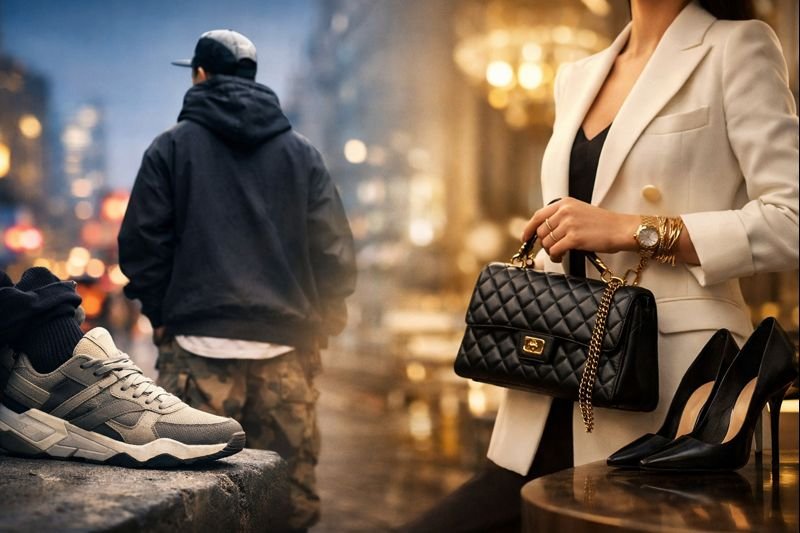
Fashion has always been a mirror of society, but never before has that mirror reflected so many influences at once. What began as underground street expression has steadily climbed the marble steps of haute couture, blurring the lines between rebellion and refinement. Today’s fashion landscape tells a fascinating story—one where sneakers walk luxury runways, hoodies command four-figure price tags, and exclusivity is no longer defined solely by tailoring or tradition.
This is the story of how streetwear didn’t just enter luxury fashion—it reshaped it.
The Roots of Streetwear: Culture Before Clothing
Streetwear was never born in boardrooms or ateliers. It emerged organically from subcultures—skateboarding in California, hip-hop in New York, punk scenes in London, and later, global youth movements connected by music and attitude rather than geography.
Early streetwear brands didn’t rely on seasonal collections or fashion editors. They thrived on authenticity. Logos were bold, silhouettes were loose, and the clothes spoke directly to identity rather than status. Wearing streetwear wasn’t about fitting in; it was about signaling belonging to a specific cultural moment.
For decades, luxury fashion largely ignored this movement. Streetwear was considered too casual, too raw, too unpolished. That dismissal would prove to be one of the industry’s biggest miscalculations.
When Luxury Took Notice
The shift didn’t happen overnight. It began subtly, with luxury houses borrowing elements—relaxed fits here, graphic prints there. But the real turning point came when high fashion stopped borrowing and started collaborating.
Suddenly, streetwear designers were being invited into luxury creative roles. High-end fashion houses began releasing limited drops instead of traditional collections. Scarcity replaced seasonal predictability, and hype became as valuable as heritage.
Luxury brands realized something crucial: younger consumers didn’t want to inherit status—they tried to create it. Streetwear offered exactly that.
Redefining What “Luxury” Means
Traditionally, luxury was defined by craftsmanship, exclusivity, and price. While those elements still matter, modern luxury has added new dimensions—cultural relevance, storytelling, and emotional connection.
A luxury item today isn’t just expensive; it’s meaningful. It carries references to music, art, social movements, or internet culture. A hoodie can now hold the same prestige as a tailored coat if it represents the right moment, the right collaboration, or the right message.
This evolution has forced luxury brands to loosen rigid rules and embrace imperfection, experimentation, and even irony—concepts once considered unthinkable in high fashion.
The Role of Social Media and Digital Culture
Fashion no longer trickles down from runway to consumer. It moves instantly, horizontally, and globally. Social media platforms have become the new fashion capitals, where trends are born in comment sections, not design studios.
Streetwear thrives in this environment. Its drop culture aligns perfectly with digital attention spans, while luxury brands benefit from the visibility and immediacy that streetwear audiences bring.
Influencers, artists, and everyday consumers now sit alongside editors and buyers as tastemakers. This democratization has permanently changed how fashion is created, marketed, and consumed.
Sustainability and the New Consumer Mindset
Another major force shaping fashion’s evolution is consciousness. Modern consumers—especially younger ones—are asking harder questions about ethics, sustainability, and transparency.
Interestingly, streetwear’s emphasis on limited production and resale culture has influenced luxury’s approach to sustainability. Smaller runs, longer product life cycles, and investment-worthy pieces are becoming more common.
Luxury fashion is learning that excess is no longer aspirational. Thoughtfulness is.
Where Fashion Is Headed Next
The future of fashion doesn’t belong exclusively to streetwear or luxury—it belongs to the space between them. Boundaries will continue to dissolve as designers pull inspiration from technology, global cultures, and individual expression rather than rigid categories.
We’re likely to see:
- More hybrid brands that defy classification
- Increased personalization and customization
- Greater emphasis on storytelling over trends
- A continued shift from ownership to experience
Fashion’s evolution is no longer about choosing sides. It’s about fluidity, identity, and relevance in a constantly changing world.
Final Thoughts
The journey from streetwear to luxury is not a takeover—it’s a conversation. One that reflects broader cultural shifts toward inclusivity, authenticity, and self-expression. Fashion today is less about where you come from and more about what you stand for.
And perhaps that’s the ultimate luxury now: wearing something that truly means something.