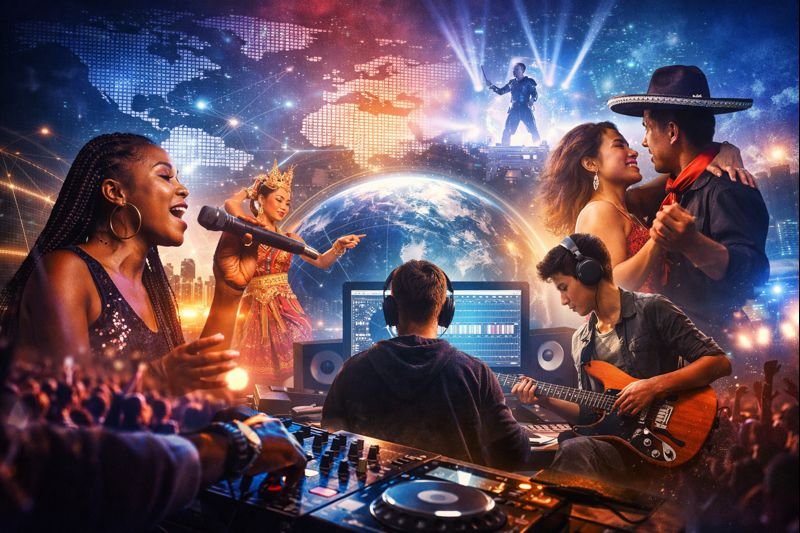
Music has always traveled faster than borders. But today, thanks to streaming platforms, social media, and grassroots digital communities, musical movements are spreading across continents in real time. From underground scenes in Africa to genre-blending experiments in Asia and Latin America, emerging music trends worldwide are reshaping how we discover, create, and experience sound.
This global shift isn’t just about new genres—it’s about new voices, new technologies, and a redefinition of what “mainstream” really means.
1. Global Genres Are Going Mainstream—Without Losing Their Roots
One of the most powerful music trends today is the rise of regional genres gaining worldwide recognition while staying deeply connected to local culture.
African-origin styles like Afrobeats and Amapiano are no longer niche. They’re influencing pop charts, fashion, dance, and even advertising worldwide. Meanwhile, Latin genres such as regional Mexican music, Afro-Latin fusion, and alt-reggaeton are evolving beyond traditional boundaries, blending with hip-hop, EDM, and indie pop.
What makes this trend unique is authenticity. Artists aren’t diluting their sound for global audiences—instead, listeners are embracing music in different languages, rhythms, and traditions.
2. Genre Boundaries Are Fading Faster Than Ever
Across the globe, artists are rejecting rigid genre labels. The result? Music that feels unpredictable, fresh, and emotionally honest.
In Europe, experimental pop artists are mixing electronic textures with folk instruments. In Asia, producers are blending hyperpop, K-pop, traditional scales, and glitchy electronic elements into entirely new sonic identities. In the Middle East, indie musicians are merging classical Arabic melodies with alternative rock and ambient music.
This genre fluidity reflects a broader cultural shift: listeners care more about mood and storytelling than labels.
3. Short-Form Video Is Driving Music Discovery Worldwide
Platforms like TikTok, Instagram Reels, and YouTube Shorts are now central to how global music trends emerge. A song recorded in a bedroom studio can go viral internationally overnight—sometimes without radio play, marketing budgets, or record-label backing.
This has changed how artists compose music. Hooks arrive faster, intros feel shorter, and emotional impact matters more than polished perfection. At the same time, older and forgotten songs are resurfacing as younger audiences reinterpret them through viral trends.
Music discovery is no longer top-down—it’s community-driven.
4. Independent Artists Are Thriving on a Global Scale
Another defining feature of emerging music trends worldwide is the rise of independent musicians who build loyal audiences without traditional gatekeepers.
Artists are using direct-to-fan platforms, live-streamed concerts, digital merchandise, and crowdfunding to sustain their careers. In regions where major labels once dominated, local indie scenes are flourishing, fueled by social media, affordable production tools, and global collaboration.
This shift is democratizing music creation and finally allowing underrepresented voices to be heard.
5. Technology Is Becoming a Creative Partner, Not Just a Tool
Technology isn’t just supporting music—it’s actively shaping it.
Artificial intelligence is being used for sound design, mastering, and even co-writing melodies. Virtual reality concerts are connecting artists with global audiences in immersive ways. Blockchain and NFTs are offering new models for music ownership and artist compensation.
What’s interesting is how artists worldwide are adapting technology in different ways. Some embrace it fully; others use it sparingly to preserve organic sound. This tension between innovation and tradition is producing some of the most exciting music of the decade.
6. Music Is Becoming More Culturally and Politically Expressive
Across continents, music is increasingly tied to identity, activism, and social change. Artists are using their platforms to address topics such as migration, climate change, gender equality, and mental health—often drawing on their own cultural experiences.
In many regions, emerging music scenes are closely linked to youth movements, underground art collectives, and digital activism. This gives the music emotional weight and cultural relevance that resonates far beyond entertainment.
7. Live Music Is Evolving Into Hybrid Global Experiences
Post-pandemic, live music has returned—but it looks different. Artists are combining physical concerts with global live streams, interactive fan chats, and virtual venues.
Festivals are booking more international acts, reflecting the growing appetite for cross-cultural sounds. At the same time, intimate local shows are gaining value as listeners seek genuine connection in an increasingly digital world.
The future of live music is both global and personal.
What These Emerging Music Trends Mean for the Future
The biggest takeaway from these emerging music trends worldwide is simple: music is more global, inclusive, and experimental than ever before.
Listeners are no longer passive consumers. They’re collaborators, curators, and cultural bridges. Artists no longer need permission to be heard. And genres no longer define creativity—they inspire it.
As technology continues to connect cultures and lower barriers, the next global sound may come from anywhere—and that’s exactly what makes this era of music so exciting.